An exceptional and rare 18k gold (750) locket pendant in the style of a poudrier, crafted with masterful French Art Nouveau detailing. This intricate piece features:
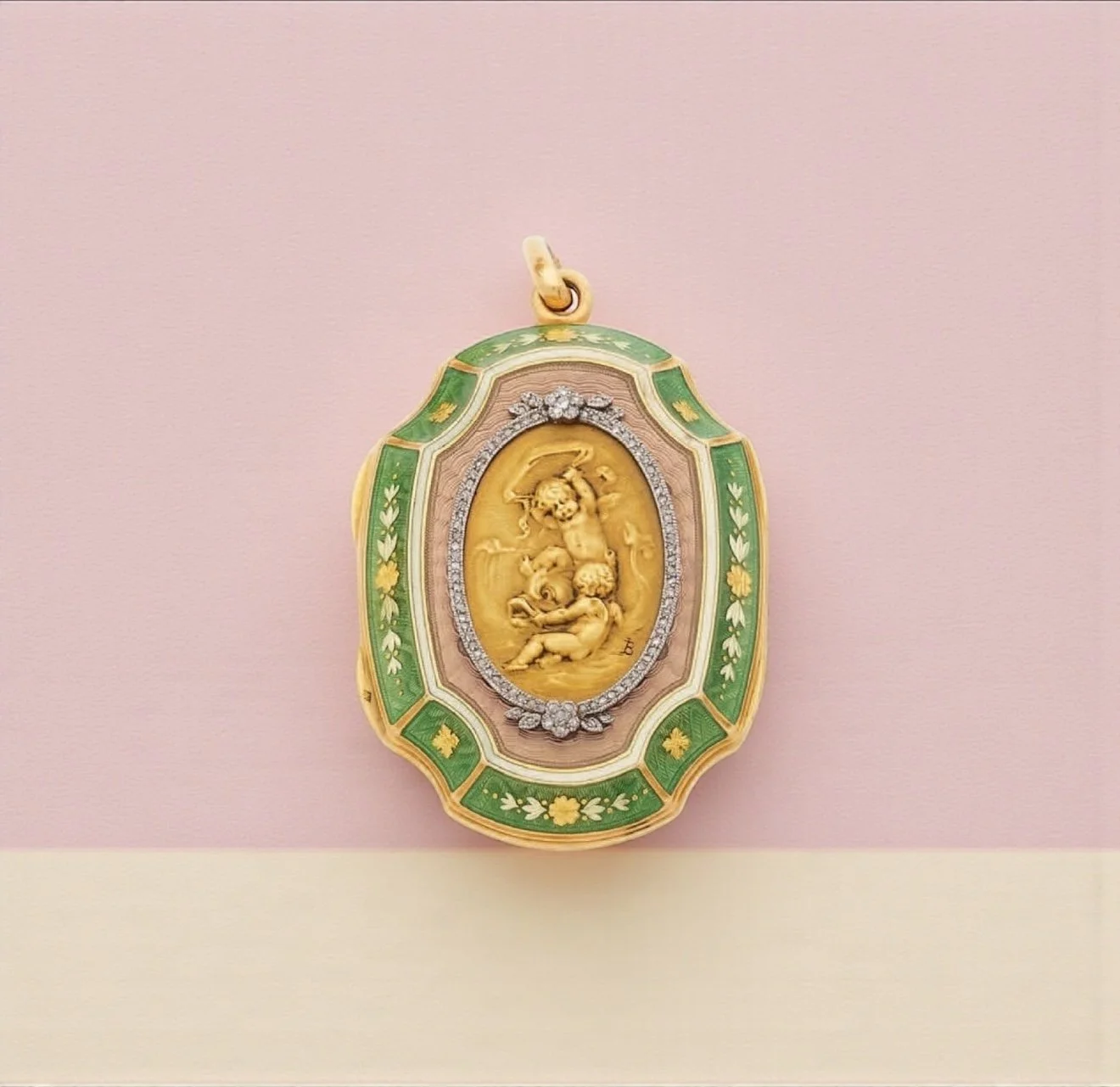
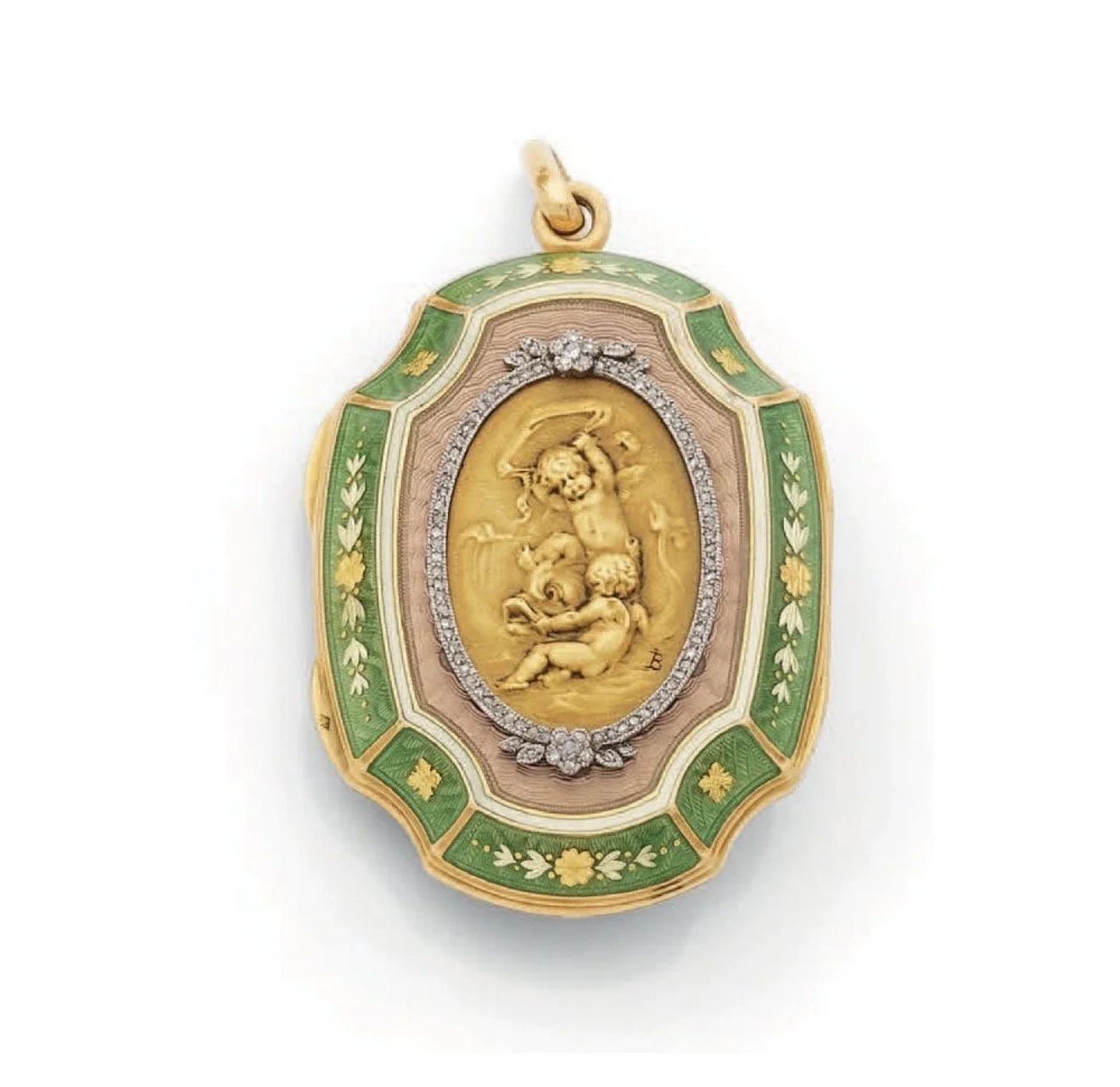
Front: A richly sculpted high-relief central medallion depicting two cherubs in a mythological scene—one brandishing a bow while the other rests on a sea creature—encased within an oval frame of rose-cut diamonds.
Surround: Vibrant guilloché enamel in soft chartreuse green, detailed with finely painted yellow and white floral garlands.
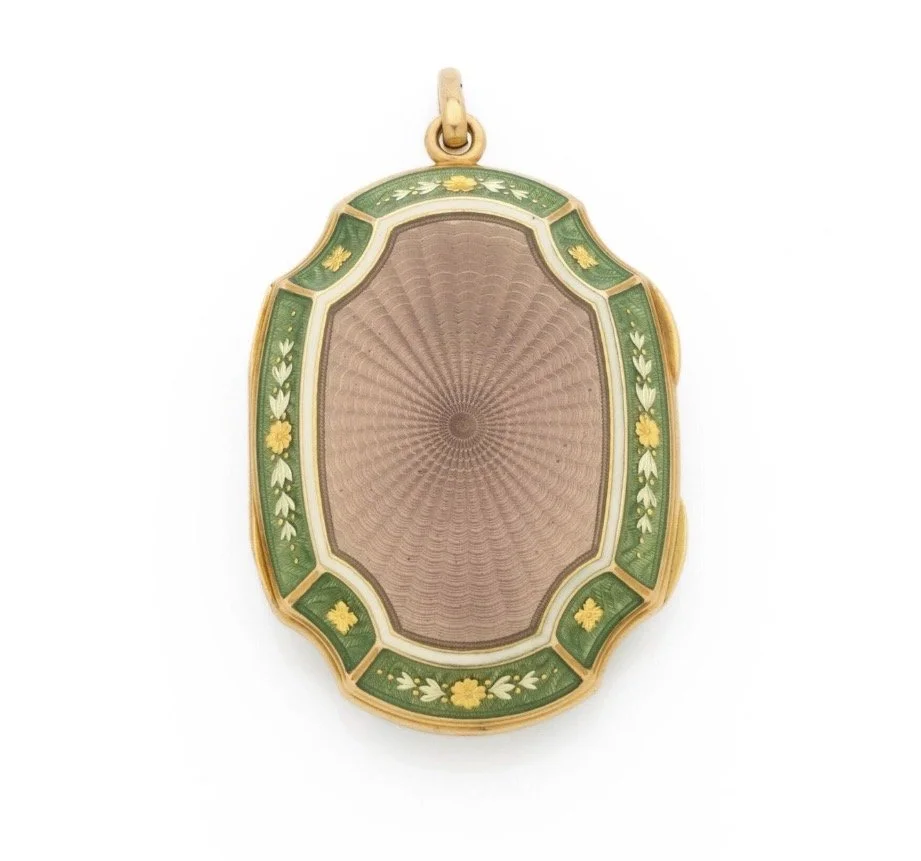
Back: Pink-toned engine-turned guilloché enamel radiating from the center, framed by the same enamel floral motif.
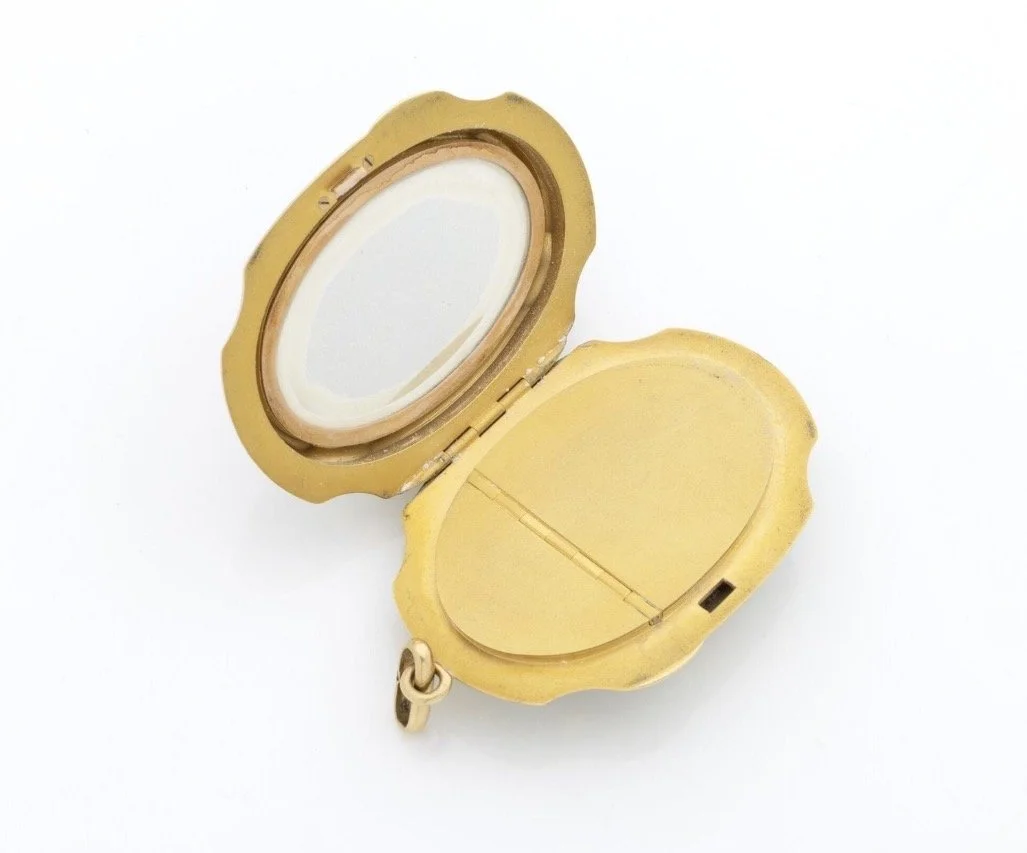
Interior: Locket opens to reveal a double compartment, likely intended to house miniature portraits or scent wafers, in true poudrier tradition.
Origin: France
Hallmark: Unidentified maker’s mark (possibly a lozenge or initial "B" visible on front relief)
Period: Belle Époque / early 20th century
Materials: 18k yellow gold, enamel, rose-cut diamonds
Technique: Guilloché enamel, repoussé relief, hand-painting
Size: 6 cm in length
Weight: 67 grams
Provenance & Style Notes:
Pieces like this were often created by master ateliers for Parisian maisons and speak to the opulence and femininity of the early 1900s. The jewel functions as both an objet d’art and wearable pendant—its color palette and figural carving evoke the Rococo revivalism favored during the Belle Époque. Similar examples are sometimes attributed to artisans in the circle of Lucien Falize or Henri Vever.
An exceptional and rare 18k gold (750) locket pendant in the style of a poudrier, crafted with masterful French Art Nouveau detailing. This intricate piece features:
Front: A richly sculpted high-relief central medallion depicting two cherubs in a mythological scene—one brandishing a bow while the other rests on a sea creature—encased within an oval frame of rose-cut diamonds.
Surround: Vibrant guilloché enamel in soft chartreuse green, detailed with finely painted yellow and white floral garlands.
Back: Pink-toned engine-turned guilloché enamel radiating from the center, framed by the same enamel floral motif.
Interior: Locket opens to reveal a double compartment, likely intended to house miniature portraits or scent wafers, in true poudrier tradition.
Origin: France
Hallmark: Unidentified maker’s mark (possibly a lozenge or initial "B" visible on front relief)
Period: Belle Époque / early 20th century
Materials: 18k yellow gold, enamel, rose-cut diamonds
Technique: Guilloché enamel, repoussé relief, hand-painting
Size: 6 cm in length
Weight: 67 grams
Provenance & Style Notes:
Pieces like this were often created by master ateliers for Parisian maisons and speak to the opulence and femininity of the early 1900s. The jewel functions as both an objet d’art and wearable pendant—its color palette and figural carving evoke the Rococo revivalism favored during the Belle Époque. Similar examples are sometimes attributed to artisans in the circle of Lucien Falize or Henri Vever.